Automatism: The Gateway to the Creative Potential.
Updated: Aug 3
(Ai was not used in the writing of this blog-post; it was used to generate a sample image herein, and labeled accordingly)
"All art is the submission of the will to the unconscious." Odilon Redon.
What do André Breton (writer), Sigmund Freud (neurologist) and André Masson (artist) have in common???
They are all freely-associated! 😂 (you'll get it in a minute)
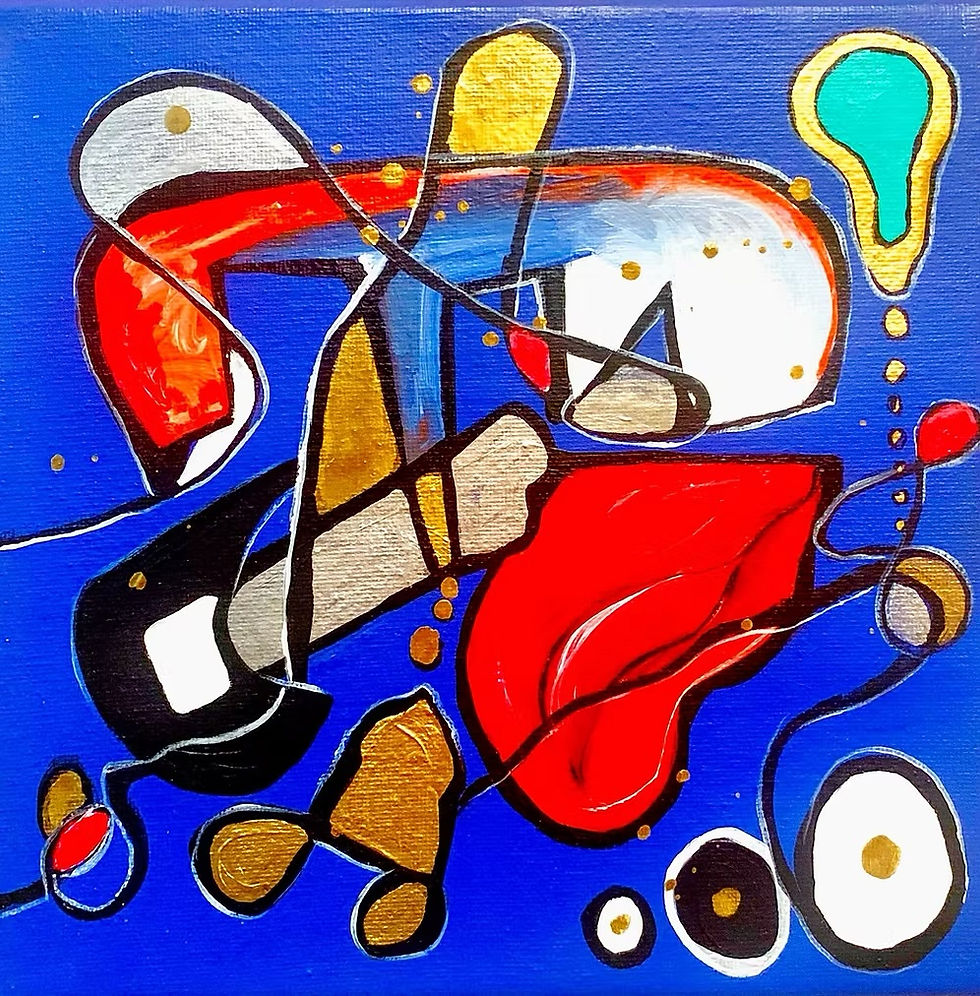
… On that note, I would like to introduce you to this blog's topic: Automatism - the process of artistic production by means of intuitive, spontaneous drawing that requires no preconceived sketch or idea, in regard to the final piece; by doing so, the individual allows the hand to get in sync with the unrestrained mind, in order to scribble lines through an uncensored process. The aim of automatism is to tap into the subconscious mind, in order to explore the creative potential. And I dare say that automatism is deeply embedded in every artist's creative process, from the painter to the musician, to the poet.
What is it?
Inherently, automatism is the process of spontaneous creative output, and I believe that it might be the gateway to genius potential, hiding behind the unassuming fluidity of the moment, and manifesting itself during peak flow states.
Automatism, as known in the arts (visual arts, literature and music), finds its roots in the psychoanalytic theories of Sigmund Freud, who popularized the technique of "free association" -- the process where the individual (in his case, his patients) would allow their stream of consciousness to be manifested as it appeared instantly, without any censorship, edit, or conscious control... The content could emerge as a word, a feeling, an image, or an experience that would randomly appear on the surface of the conscious mind, and become the object of reflection. And thus, "free association" is the foundation of automatism; a method by which the individual relaxes and allows mental content to appear without summoning it. More often than not, this process aims to explore the contents of the subconscious mind.

Brief History
Automatism is the precursor and foundation to the surrealist movement. Its formal history goes back to the 1920s -although I personally believe that the expression of basic human creativity manifested as spontaneous mark-making, can't be formally and rigidly time framed to a specific year.
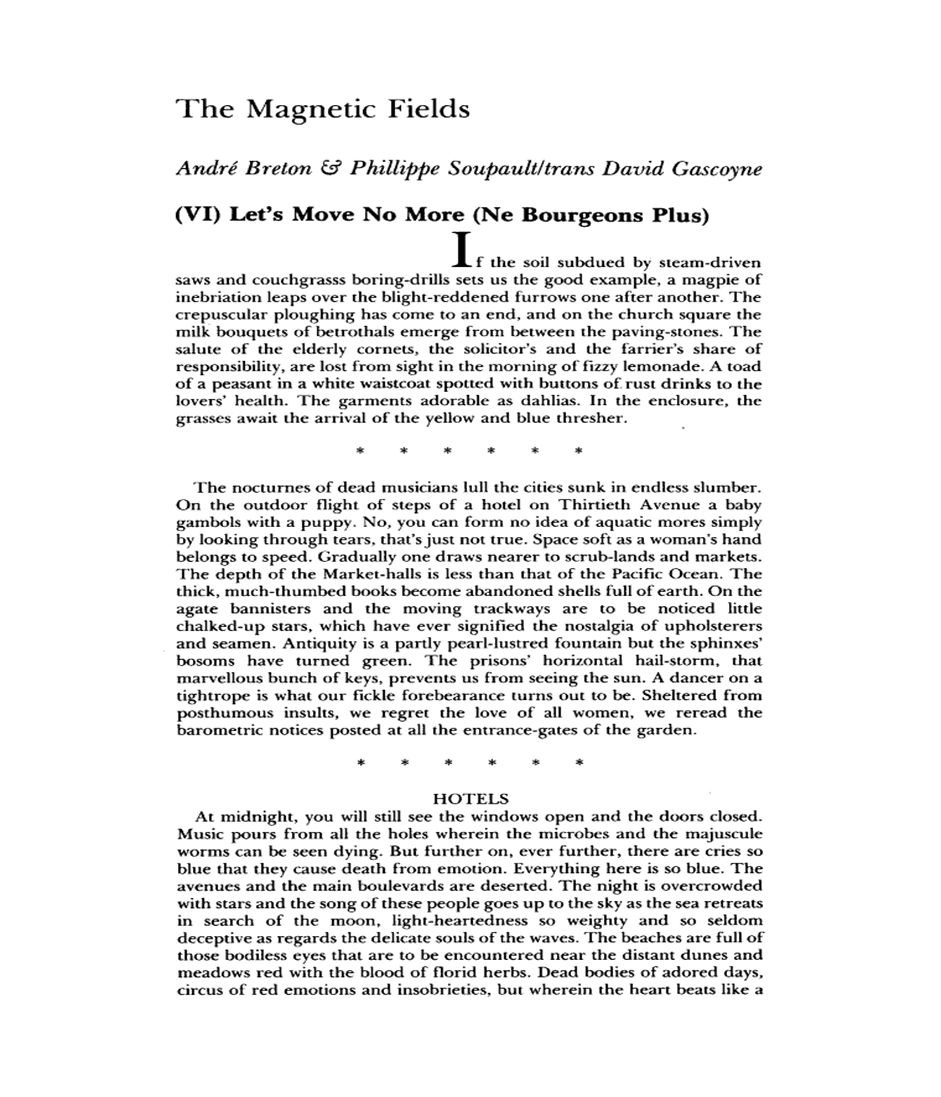
During the early 1900s, under the influence of the Freudian technique of free association, various intellectual movements found momentum; one of these was the surrealist movement, spearheaded by French poet André Breton, and jump-started via his ‘Manifesto of Surrealism’, which defined surrealism as ‘pure psychic automatism’. Breton himself has been credited as the author of the first sample of literary surrealism, produced with the technique of automatic writing, and resulting in the creation of the work titled "Les Champs Magnétiques" (The Magnetic Fields). A seminal literary work that defined surrealist automatism.
---
---
It is important to note that automatic writing precedes surrealist automatism; this practice has been widely used since ancient times by spiritual, mystical and religious circles, where it has been known as spirit-writing, and practiced during trance-like states.
French artist André Masson, is credited with officially creating the first samples of automatic drawings (although to me, this is questionable), as defined by automatic surrealism.

The particularity of automatic drawing, surrealist automatism and free-association, is defined by imagery that seems fantastical & erotic, amorphous & geometrical, biological & mechanical, and at times, paradoxically coherent & incomprehensible... All of these reflect the mental undertones of buried memories and feelings, in relation to the creative potential, whereby the subconscious murmurs the idea, and the conscious mind executes it.
Personal Practice
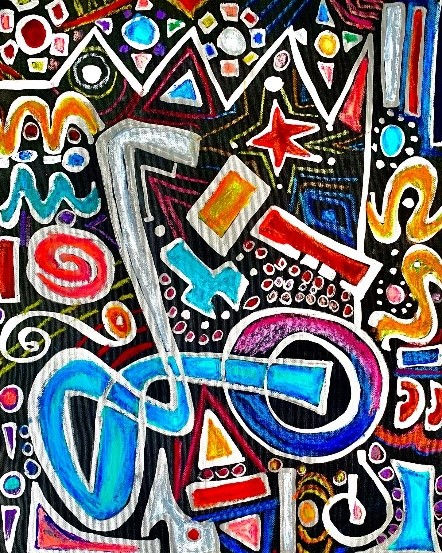
At times, automatism works for me as an icebreaker between myself and an empty canvas or a blank sheet of paper. This technique has been an essential part of my artistic practice, and in earnest, it is one of my favorite modalities of creation.
Whenever I feel artistically stuck, rigid or stressed, being able to pick up color pencils and just draw or sketch randomly, is one of the best tools available to help me release tension, and easily re-insert myself into the creative process.
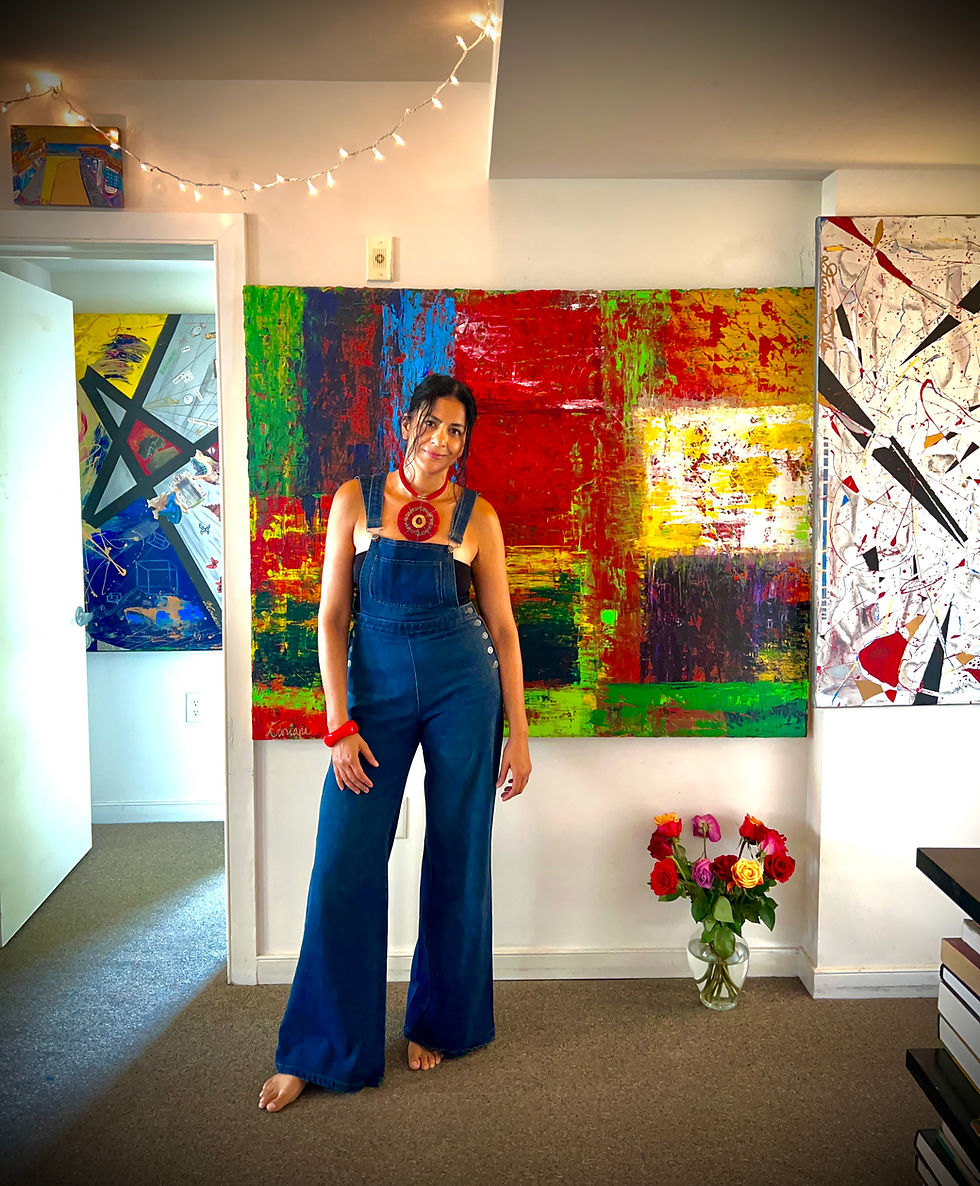
For me, automatic drawing is not about beauty or perfection, but more about ease, creativity, and unrestrained mental processes. Most of my abstract works have been done under the spell of automatism; I just play some music that is suitable for the moment, and go for it, either with color pencils or acrylics.
So, next time life throws a curveball at you, and the weight of the world burdens your soul, give it a try: get some color pencils and a sketchbook, or just a pen and a notebook, find a quiet place where you won’t be disturbed, close your eyes and focus on your breathing for a minute, and when you are relaxed, just allow your hand to move as it wishes to scribble; don’t worry about the mark-making being good or bad… During the process of automatic drawing or sketching, there is not good or bad, just ease and creativity.
Let loose, and let me know how it goes!
“What Stein called ‘the wandering line’ is probably a key characteristic of my work. But it wasn’t the line that was wandering, it was me.” - André Masson


Comments